The 4Cs of Lab-Grown Diamonds Explained: How to Choose the Perfect Diamond
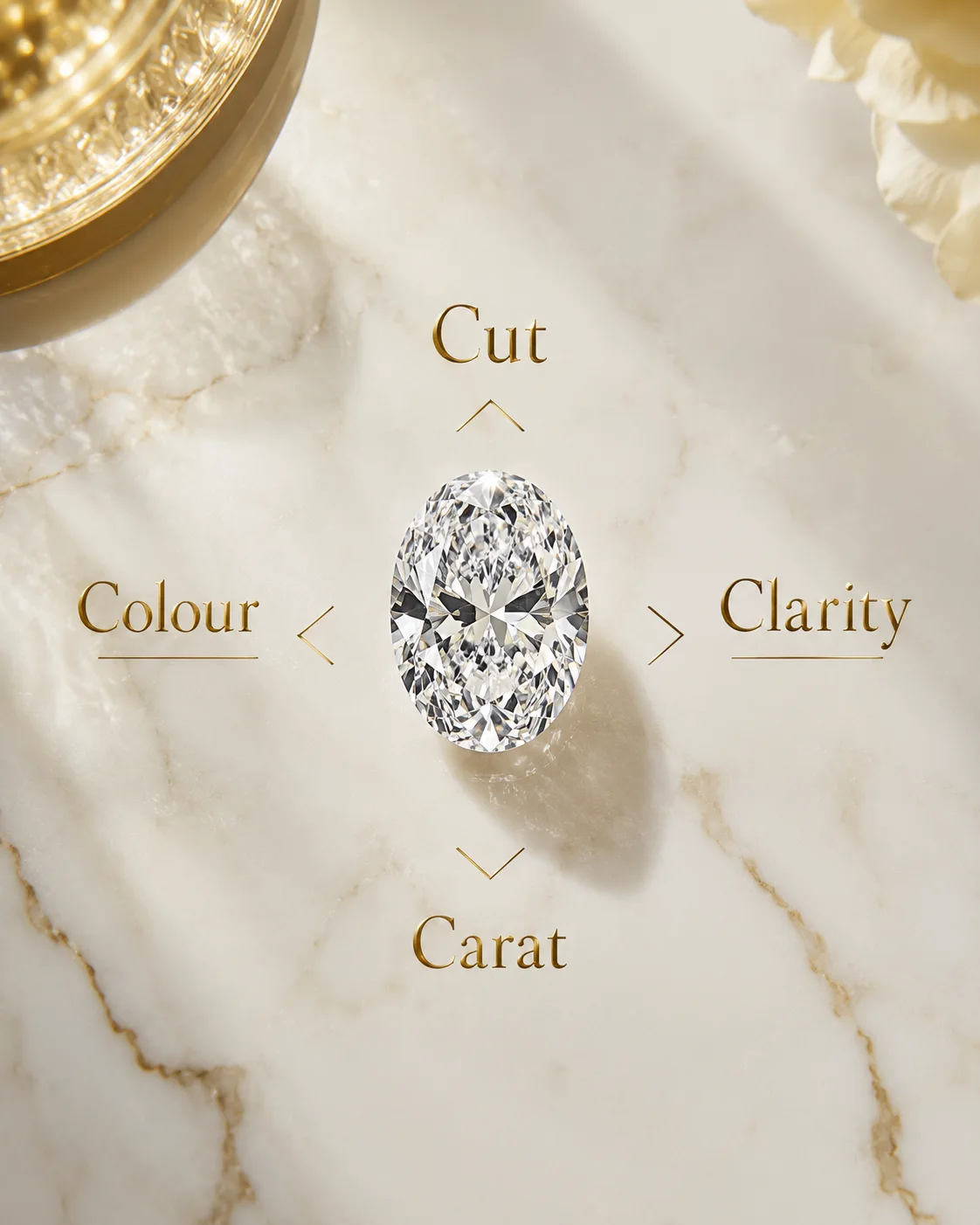
Buying a diamond can feel overwhelming when you're faced with unfamiliar grading terms like Cut, Colour, Clarity, and Carat Weight. These four characteristics, commonly known as the 4Cs, are the global standard used to evaluate every diamond, whether it's mined from the earth or grown in a laboratory.
Understanding the 4Cs empowers you to make a confident purchase rather than relying solely on price or appearance. Instead of simply choosing the biggest diamond within your budget, you'll know how to select a stone that delivers exceptional brilliance, beauty, and long-term value.
In this guide, we'll break down each of the 4Cs in simple language, explain why some factors matter more than others, and share practical buying tips to help you choose the perfect certified lab-grown diamond.
What Are the 4Cs of Diamonds?
The 4Cs were developed as the universal diamond grading system to help buyers compare diamonds objectively. Every certified diamond is evaluated based on these four characteristics:
Cut – How well the diamond reflects light.
Colour – How colourless the diamond appears.
Clarity – The presence of natural inclusions or blemishes.
Carat Weight – The weight and perceived size of the diamond.
These grading standards apply equally to both lab-grown and natural diamonds. Whether you're shopping for an engagement ring or a pair of diamond earrings, understanding the 4Cs is essential to making a smart purchase.
The most beautiful diamond isn't always the biggest one—it's the one with the right balance of the 4Cs.
1. Cut – The Most Important of the 4Cs
If there is one characteristic you should never compromise on, it's Cut.
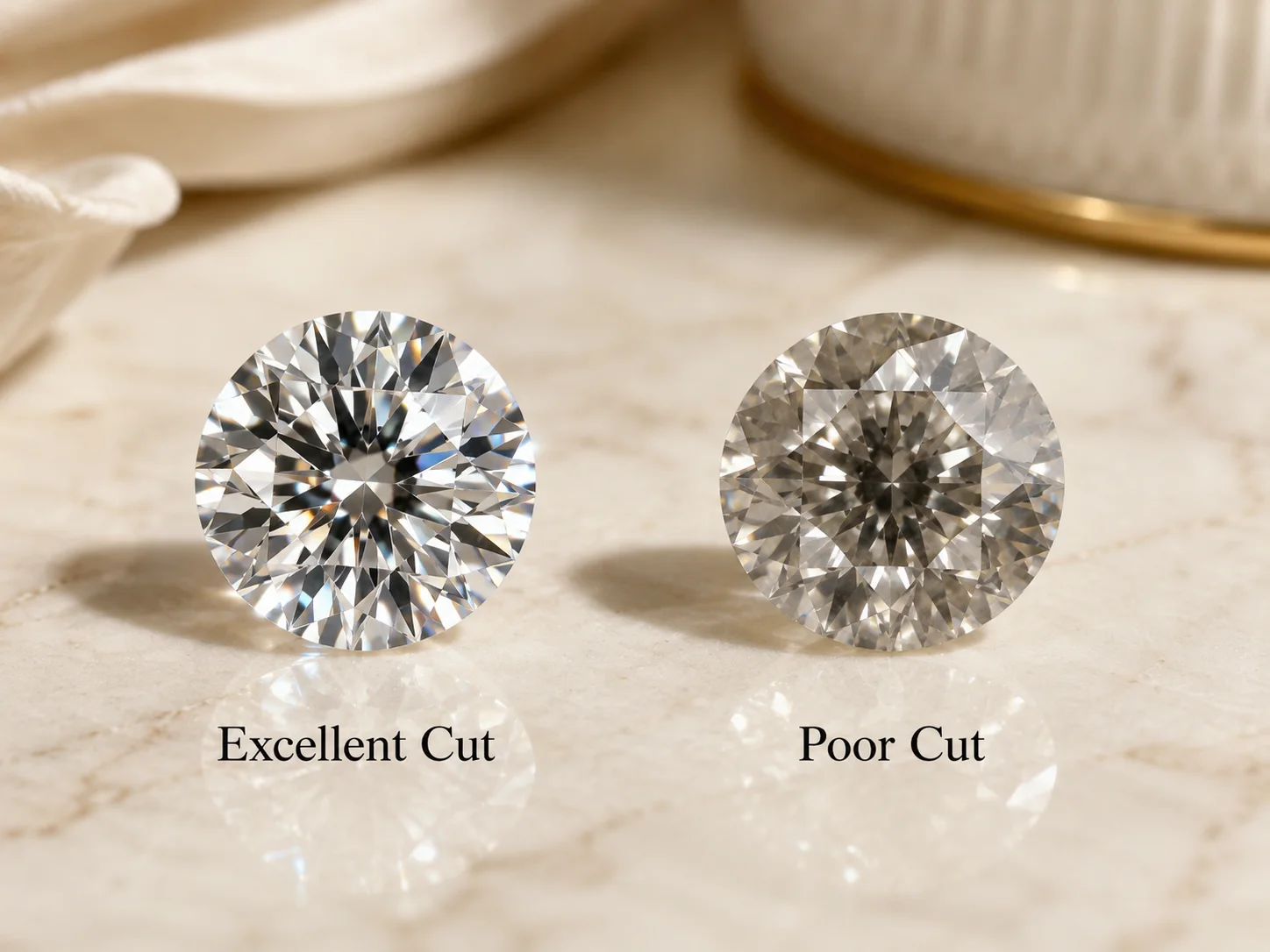
Many people mistakenly believe that cut refers to a diamond's shape, such as oval, round, or pear. In reality, cut measures how precisely a diamond has been crafted to reflect light.
A well-cut diamond allows light to enter through the top, bounce around the internal facets, and return to your eye as brilliant sparkle. A poorly cut diamond allows light to escape through the sides or bottom, making it appear dull regardless of its size or clarity.
This is why two diamonds with the same carat weight can look completely different in terms of brilliance.
Cut Grades
Excellent
Very Good
Good
Fair
Poor
Whenever possible, choose a diamond with an Excellent or Very Good cut grade. The difference in sparkle is immediately noticeable and often has a greater visual impact than increasing carat weight or clarity.
2. Colour – How White Is Your Diamond?
Diamond colour measures how colourless a diamond appears. Contrary to what many people think, the highest-quality white diamonds actually have less colour, not more.
The grading scale begins at D, which represents a completely colourless diamond, and continues through the alphabet as more warmth or yellow tint becomes visible.
Most buyers won't notice the difference between neighbouring grades without specialised equipment, making it possible to achieve excellent value by choosing the right colour range.
Diamond Colour Scale
D–F: Colourless (highest grades)
G–H: Near Colourless (excellent value)
I–J: Slight warmth visible
K and below: Noticeable colour tint
For most engagement rings, G and H colour diamonds provide the ideal balance between beauty and value. They appear beautifully white once set while costing significantly less than D or E colour diamonds.
If you're choosing a yellow gold setting, slightly warmer colour grades can still look stunning because the metal naturally complements the diamond.
3. Clarity – Understanding Nature's Fingerprints
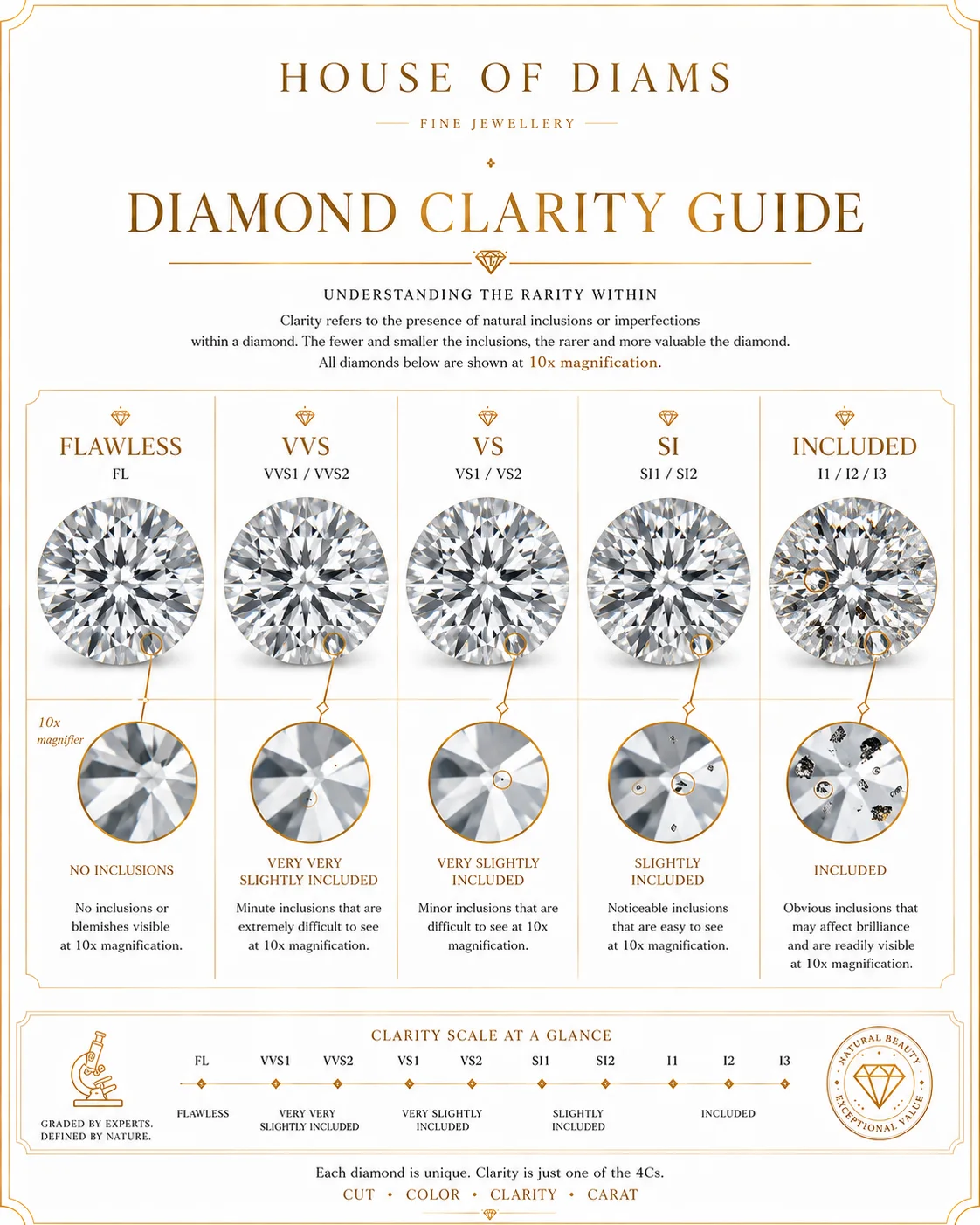
Clarity refers to the tiny natural characteristics found inside or on the surface of a diamond. These internal marks are called inclusions, while surface marks are known as blemishes.
Almost every diamond contains these microscopic characteristics, making each one unique. Fortunately, most inclusions are invisible without magnification and have no effect on a diamond's beauty.
Rather than paying significantly more for perfection that cannot be seen with the naked eye, many buyers prefer diamonds that appear "eye-clean."
Common Clarity Grades
FL – Flawless
IF – Internally Flawless
VVS1 & VVS2 – Very Very Slightly Included
VS1 & VS2 – Very Slightly Included
SI1 & SI2 – Slightly Included
I1–I3 – Included
For excellent value, many jewellery experts recommend choosing VS1, VS2, or an eye-clean SI1 diamond. These grades often appear identical to much higher clarity diamonds without the premium price tag.
4. Carat Weight – Bigger Isn't Always Better
Carat refers to a diamond's weight, not its physical size. One carat equals 0.20 grams, but two diamonds with the same carat weight can appear different in size depending on their shape and cut quality.
Many buyers assume that increasing carat weight automatically creates a more beautiful diamond. However, a smaller diamond with an excellent cut often appears brighter and more attractive than a larger diamond with poor proportions.
Understanding how carat weight influences pricing can also help you maximise your budget.
Smart Buying Tip
Diamond prices increase significantly at popular weight milestones such as 1.00 carat, 1.50 carats, and 2.00 carats.
Instead of purchasing exactly one carat, consider diamonds weighing 0.90–0.95 carats. They often look almost identical in size while costing considerably less.
The same strategy applies to larger diamonds, allowing you to maximise value without sacrificing appearance.
A well-cut 0.90-carat diamond can outshine a poorly cut 1-carat diamond every single day.
How Should You Prioritise the 4Cs?
Every buyer has a different budget, but the best approach is to prioritise the characteristics that have the greatest impact on beauty.
While all four grading factors are important, they don't contribute equally to a diamond's appearance.
1. Prioritise Cut above everything else.
2. Choose a carat weight that suits your budget.
3. Select a colour grade that appears white in your chosen metal.
4. Choose an eye-clean clarity grade instead of paying extra for microscopic perfection.
The Ideal 4Cs for Most Buyers
If you're looking for an exceptional balance of beauty, quality, and value, many jewellery professionals recommend the following combination:
Excellent Cut
G or H Colour
VS1 or VS2 Clarity
Carat Weight based on your budget
This combination delivers outstanding brilliance while avoiding unnecessary costs for characteristics that are rarely visible to the naked eye.
Final Thoughts
Understanding the 4Cs transforms the way you shop for diamonds. Instead of focusing solely on size or price, you'll be able to evaluate a diamond based on the qualities that truly influence its beauty and long-term satisfaction.
At House of Diams, every certified lab-grown diamond is carefully selected to meet high standards of brilliance, craftsmanship, and value. Our team believes that an informed buyer is a confident buyer, and we're here to help you understand every detail before making your decision.
Whether you're choosing your first engagement ring or upgrading a cherished piece of jewellery, mastering the 4Cs will help you invest in a diamond you'll love for a lifetime.
The perfect diamond isn't about having the highest grades—it's about finding the right balance of beauty, quality, and value for you.
4Cs of DiamondsLab-Grown DiamondsDiamond EducationDiamond Buying GuideCut Colour Clarity CaratCertified DiamondsEngagement RingsHouse of DiamsDiamond Quality